
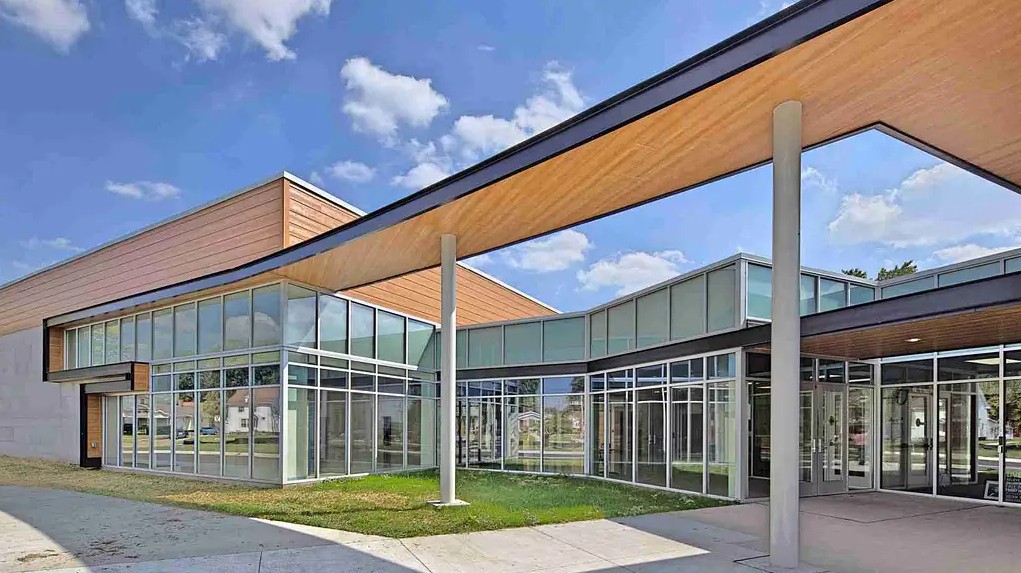
In recent years, with the widespread adoption of green and low-carbon concepts, the use of steel structures in campus buildings has increased significantly. Steel-structured schools are an outstanding example of integrating modern construction technology with educational needs. Rather than simply building a school out of steel, they represent a new model for campus construction that is fast, green, safe, and flexible.
Why choose a steel-structured school?
1. Extremely fast construction, quickly meeting enrollment requirements
Major components such as beams, columns, and floor slabs are prefabricated in the factory and assembled on-site like Lego blocks. Construction time is 30%-50% shorter than with traditional concrete structures.
Dry construction significantly reduces the impact of rain and low temperatures on construction.
Can quickly fill enrollment gaps caused by population growth.
2. Environmentally friendly, in line with sustainable development
Steel is 100% recyclable. After decommissioning, the main structural materials can be recycled, resulting in minimal construction waste.
On-site noise, dust, and wastewater emissions are far lower than with traditional construction, minimizing impact on the surrounding environment and existing teaching procedures.
3. Safe and reliable, especially with superior seismic performance
Steel has excellent ductility and can effectively absorb earthquake energy through deformation, preventing sudden collapse. In areas with high seismic intensity, steel-structured schools are one of the best options for protecting the lives of teachers and students. 4. Flexible spatial layout, suitable for future educational changes
Steel structures can easily achieve large spans and column-free or column-reduced spaces that are difficult to achieve with traditional structures. This facilitates the creation of open-plan multi-purpose halls, gymnasiums, libraries, and flexible classroom configurations.
When schools need to upgrade, renovate, add floors, or expand, steel structures are easily welded and bolted, making retrofits simple and relatively cost-effective.
5. High building quality and controllable precision
Components are manufactured in a digitally controlled factory environment, ensuring precise dimensions and consistent quality, far superior to on-site manual casting.
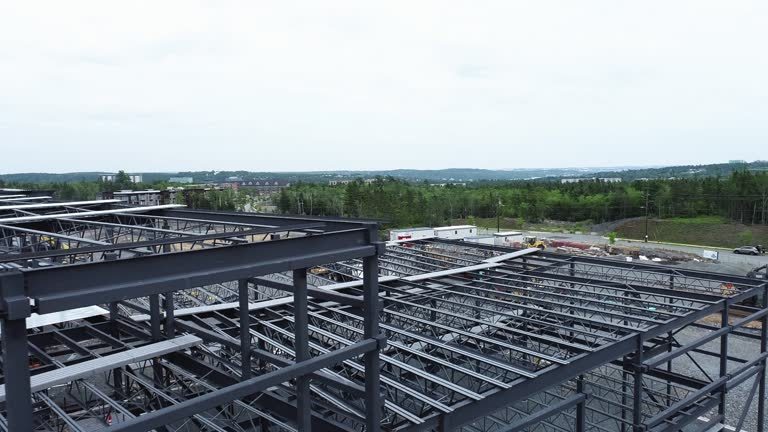
Main Structural Forms
1. The most common structural form, the steel frame structure consists of steel columns and beams connected rigidly to form a spatial framework. It is suitable for multi-story and high-rise teaching buildings, dormitories, and office buildings. It provides a well-organized space and flexible layout.
2. The portal steel frame structure uses rigid connections between beams and columns, creating a portal shape and a gentle roof slope. It is suitable for single-story, large-space buildings such as school gymnasiums, weatherproof playgrounds, cafeterias, and lecture halls.
3. The truss/grid structure uses triangular members to form a long-span roof. It is suitable for roofs of large gymnasiums, auditoriums, and other locations where a wide span is required.
Considerations:
Despite their significant advantages, steel-structured schools must properly address the following issues during design and construction:
1. Fire Safety
Steel's strength rapidly decreases at high temperatures. Therefore, all steel components must be sprayed with fire-retardant coating to achieve the required fire resistance limit. Alternatively, fireproof panels or concrete wrapping can be used.
2. Corrosion and Rust Prevention
Humid environments can cause steel to rust, so it must be galvanized or primed with an anti-rust primer before leaving the factory, and regularly maintained and repainted.
3. Sound Insulation and Noise Reduction
Steel and lightweight walls have low density, so sound insulation is a key concern. Wall cavities and floor ceilings should be filled with soundproofing foam; a composite floor system of "floor slab + concrete screed" should be used to increase mass for improved sound insulation, or soundproofing structures such as floating floors should be employed.
4. Thermal Insulation and Energy Saving
Using composite sandwich panels as enclosing walls offers excellent thermal insulation, or installing a continuous insulation layer on the outside of the steel structure skeleton can eliminate "cold bridges" and prevent condensation and energy loss. 5. Comfort and Vibration
Steel structures are relatively "soft," and people may be sensitive to even the slightest vibration of the floor. Technical measures such as increasing floor stiffness and installing tuned mass dampers can be used to control vibration and ensure user comfort.
Classic Application Scenarios
Modular Schools: Classrooms and other functional spaces are completely fabricated into fully furnished "modular boxes" in the factory, allowing for rapid on-site assembly and stacking, achieving the miracle of "building a school overnight."
Earthquake-Resistant Schools: In earthquake-prone areas, steel-structured schools are the preferred solution for ensuring student safety.
Temporary or Transitional School Buildings: High-quality temporary steel-structured classroom buildings can be quickly erected during the renovation of existing school buildings.
Rural School Construction: Leveraging its advantages of fast construction and minimal on-site labor requirements, it can rapidly improve educational facilities in remote areas.
Summary and Outlook
Steel-structured schools are by no means synonymous with "temporary" or "low-standard" construction. On the contrary, through sophisticated technology and refined design, they can create safe,
comfortable, environmentally friendly, beautiful, and modern campus spaces.
They represent an efficient and sustainable development path for future school construction, perfectly embracing modern education's pursuit of flexibility, safety, and social benefits.
With technological advancements and shifting consumer perceptions, steel-structured schools will be increasingly widely used worldwide.
If you're planning a steel-structured school, we welcome your support, whether it's overall campus design, structural selection, or component quality control. We'll provide comprehensive,
professional services from design to implementation, tailored to your school's functional needs (such as classroom layout, gymnasium span, and laboratory safety standards), helping you create a safe,
efficient, and flexible campus.
How to contact us:
Tel/WeChat:+86 15216408075
E-mail:info@antsteelstructure.com
WhatsApp:+86 15216408075
Please contact Elio


By clicking 'Allow All', you agree to the storage of cookies on your device to enhance site navigation, analyze site usage and assist with our marketing efforts.