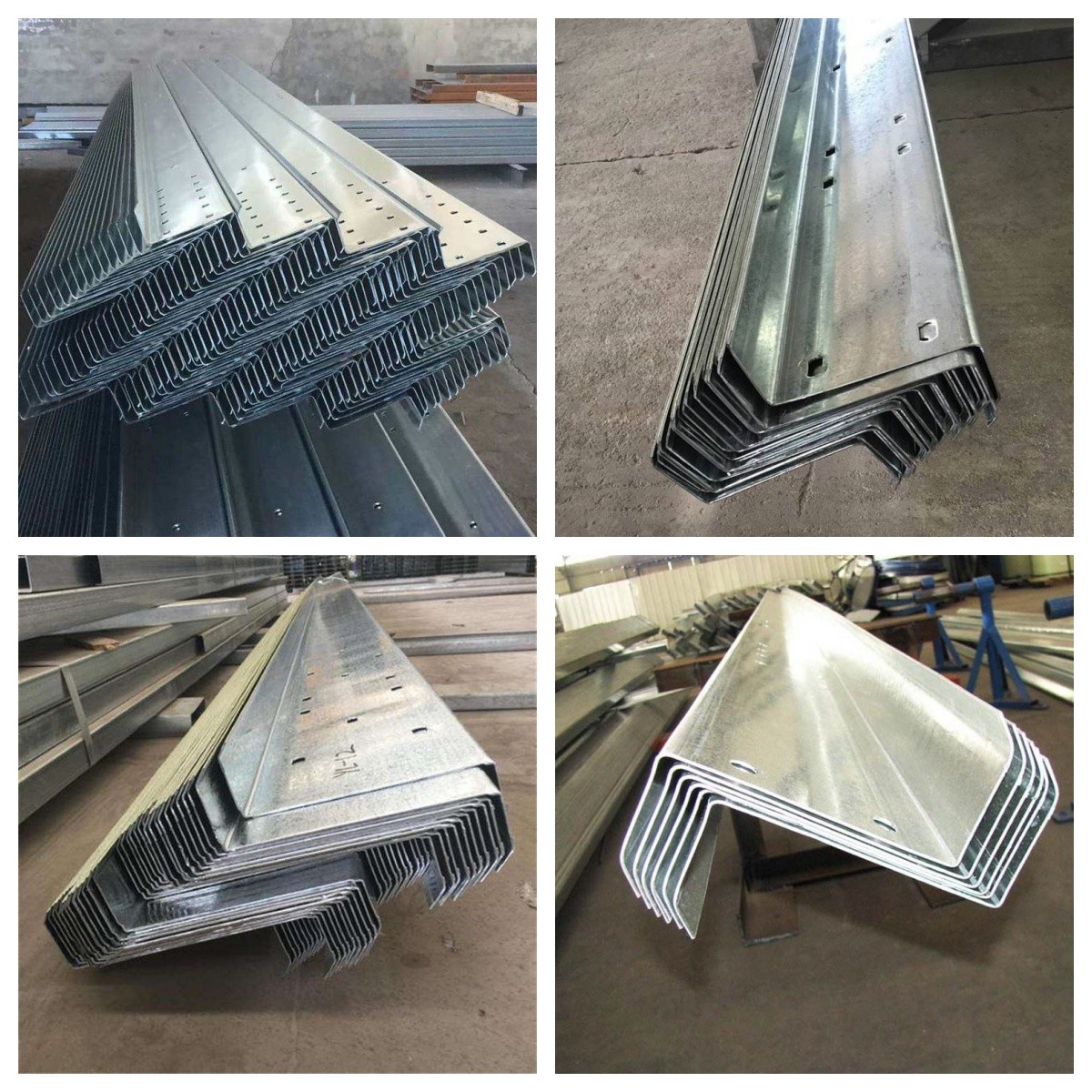
Z-shaped steel, as its name suggests, possesses a unique "Z"-shaped cross-section that gives it significant advantages over other steel sections (such as I-beams or channel steel). Its geometry provides an
excellent strength-to-weight ratio, facilitates integration with other materials, and flexibly meets various structural requirements. Whether you are designing industrial buildings, wareh ouses, or bridges,
Z-shaped steel is a reliable choice.
This guide will explore in depth why Z-shaped steel is ideal for structural applications, highlighting its characteristics, advantages, and wide range of applications across various industries.
What is Z-shaped steel?
Z-shaped steel, also known as Z-purlins or Z-section steel, is a type of rolled steel that resembles the letter "Z" in shape. It is primarily used in structural framing to provide essential support for roofing and
wall systems. Its unique design allows for overlapping connections, thereby improving load distribution and structural stability.
Key characteristics of Z-shaped steel:
Lightweight and strong: Combines strength and lightweight, enabling efficient construction.
Corrosion resistant: Typically treated or coated, suitable for harsh environments.
Versatile: Compatible with a variety of structural systems.
Cost-effective: Reduces material costs without compromising performance.
Advantages of Z-shaped steel in structural applications
High Load-Bearing Capacity
Z-shaped steel, with its unique geometry, possesses exceptional load-bearing capacity, making it ideal for supporting roofs, walls, and floors in large buildings.
Lightweight Structure
Compared to other structural steels, Z-shaped steel is lighter, reducing transportation and installation costs and simplifying on-site handling.
Flexibility and Versatility
Z-shaped steel can be used in a variety of structural configurations, from single-span systems to complex multi-span frames. Its overlapping properties make it ideal for seamless construction.
Cost-Efficient Solution
Its strength-to-weight ratio minimizes material usage, reducing overall project costs while maintaining structural integrity.
Environmental Corrosion Resistance
Coated or galvanized Z-shaped steel exhibits good corrosion resistance, making it suitable for outdoor and industrial applications frequently exposed to moisture or chemicals.
Applications of Z-shaped Steel
Z-shaped steel is widely used in various industries due to its unique properties. The following are some of its main applications:
* **Roofing and Wall Systems**
As Z-shaped purlins, they support roof slabs and wall cladding in commercial and industrial buildings, ensuring their stability and service life.
* **Bridges and Infrastructure**
Its high strength and light weight make it ideal for bridge components and other infrastructure projects requiring high load-bearing capacity.
* **Industrial Buildings and Warehouses**
Z-shaped steel is commonly used in the framing structures of warehouses, factories, and storage facilities, providing necessary structural support.
* **Solar Panel Mounting Systems**
Its corrosion resistance and lightweight properties make Z-shaped steel an ideal material for solar panel frames and mounting structures.
* **Transportation**
It is used to manufacture lightweight and durable components for vehicles and rail vehicles.
Table: Comparison of Z-shaped steel with other structural steel profiles
This table highlights the comparison between Z-shaped steel and other commonly used steel shapes, emphasizing its unique advantages in structural applications.
Why Z-shaped steel is ideal for structural engineering:
Simplified construction: The overlapping structure of Z-shaped steel makes it easy to assemble and disassemble, thus speeding up construction and reducing labor requirements.
Enhanced durability: Galvanized or treated Z-shaped steel has the ability to withstand environmental stresses over a long period, making it ideal for building durable structures.
Structural efficiency: Its unique shape distributes loads evenly throughout the structure, reducing the risk of failure and ensuring structural stability even under extreme conditions.
Customizable design: Z-shaped steel can be customized to specific design requirements, making it ideal for architects and engineers.
Conclusion
Z-shaped steel has proven to be a transformative technology in structural applications. Its unique design, combined with its strength, durability, and cost-effectiveness, makes it the preferred choice for
projects across various industries. From industrial buildings to bridges and solar panel systems, Z-shaped steel demonstrates unparalleled versatility and reliability.
As building requirements continue to evolve, the importance of selecting the right materials to ensure structural integrity cannot be overlooked. Z-shaped steel not only meets these requirements but
exceeds expectations, demonstrating superior value and performance in every project.
Frequently Asked Questions
What are the uses of Z-shaped steel?
Z-shaped steel is primarily used in roofing and wall systems, industrial buildings, bridges, and solar panel installation systems. It provides structural support and ensures stability.
How does Z-shaped steel compare to other steel sections?
Compared to other steel sections (such as I-beams or C-channels), Z-shaped steel has a higher strength-to-weight ratio and better lap joint performance, making it ideal for specific applications such as roof
purlins.
Is Z-shaped steel corrosion-resistant?
Yes, most Z-shaped steel products are galvanized or coated to enhance corrosion resistance, ensuring their service life even in harsh environments.
Can Z-shaped steel be customized for specific projects?
Yes, Z-shaped steel can be customized in various sizes and surface treatments to meet specific project requirements, making it highly adaptable.
Why is Z-shaped steel cost-effective?
Due to its excellent strength-to-weight ratio, Z-shaped steel minimizes material usage, thereby reducing costs without compromising performance or durability.

By clicking 'Allow All', you agree to the storage of cookies on your device to enhance site navigation, analyze site usage and assist with our marketing efforts.